
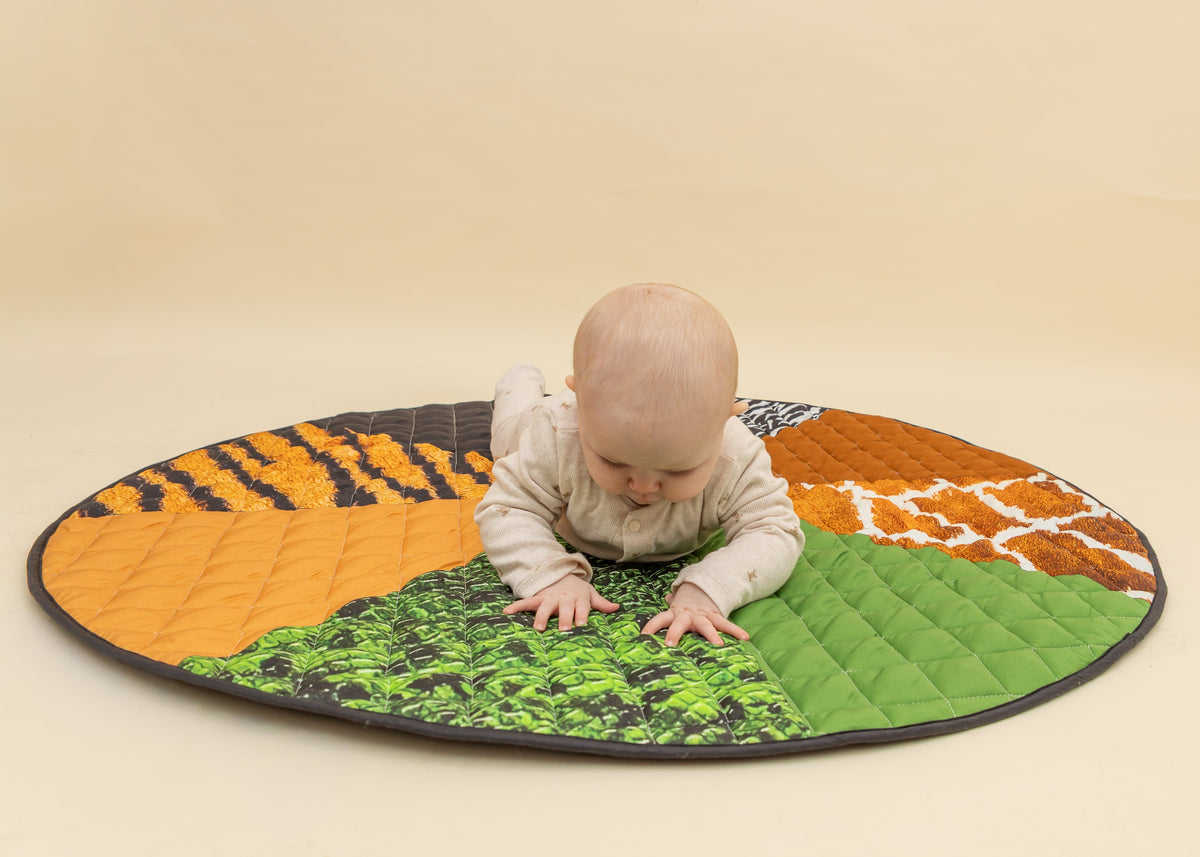
Tummy time is one of the simplest ways to introduce movement and floor play into your baby’s day. It means giving your baby time on their tummy while they are awake, alert and supervised.
It doesn’t need to be a long activity or something you have to get perfectly right. For younger babies especially, little and often can be a good place to start.
Why is tummy time important?
Spending time on their tummy encourages your baby to use the muscles in their neck, shoulders, back and upper body.
These muscles gradually support the movements babies use as they develop, including lifting and turning their head, reaching, rolling, sitting and eventually crawling.
Tummy time also gives your baby a different perspective on their surroundings. From the floor, there are faces, patterns, textures and objects to notice and explore.
When can you start tummy time?
Tummy time can be introduced from birth.
For a newborn, this doesn't have to mean immediately placing them on a playmat. Lying your baby on your chest while you're fully awake is one way to begin, before gradually introducing tummy time on the floor when they're ready.
How much tummy time does my baby need?
Start small.
Short periods throughout the day can be easier for a young baby than trying to complete one long session. As they become more comfortable and stronger, you can gradually increase the time.
Current UK physical activity guidance recommends aiming for at least 30 minutes of tummy time spread throughout the day for babies who aren't yet mobile.
There is no need to turn that into a stopwatch exercise. Follow your baby's cues and build it into everyday moments of awake play.
What if my baby doesn't like tummy time?
That's something many parents experience.
Try changing how you approach it. You could lie face-to-face with your baby, talk or sing to them, place something interesting within view, or try tummy time on your chest or lap.
A small rolled towel placed under their arms can also provide additional support when they're getting used to floor-based tummy time.
If they're becoming upset, you can stop and try again another time. Tummy time doesn't need to become a battle.
Making tummy time more interesting
As your baby becomes more alert and interested in their surroundings, you can give them simple things to look at and explore.
Try getting down to their level so they can see your face. Talk, sing or move around them. You can also introduce age-appropriate toys, interesting textures or bold patterns within their field of vision.
The aim isn't to constantly entertain them. Give them time to look, respond and explore at their own pace.
Using a sensory playmat
A comfortable floor space can help make tummy time part of your baby's everyday play routine.
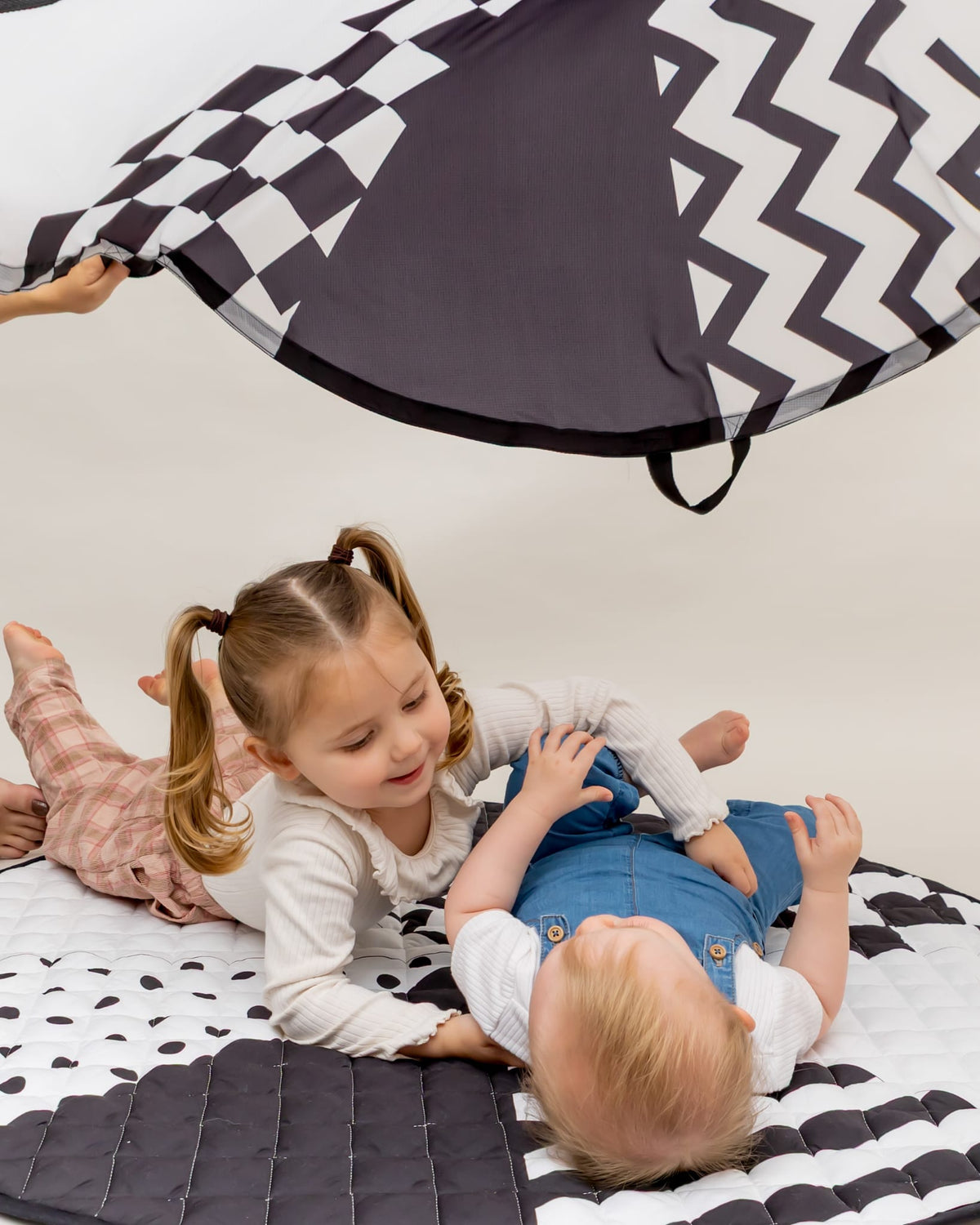
Sensory playmats can introduce different patterns and visual details into that space while giving babies room for supervised floor play, reaching and movement.
At Sunshine & Honey, our sensory playmats have been designed with bold visual patterns to give little ones plenty to notice while they explore.
Tummy time and safe sleep are different
This is particularly important: tummy time is for awake, supervised play.
For sleep, babies should be placed on their backs in a clear, flat and firm sleep space. Never use tummy time guidance as advice to place a baby on their front to sleep.
If you're concerned about your baby's movement or development, speak to your health visitor or another appropriate healthcare professional.

Leave a comment
This site is protected by hCaptcha and the hCaptcha Privacy Policy and Terms of Service apply.