
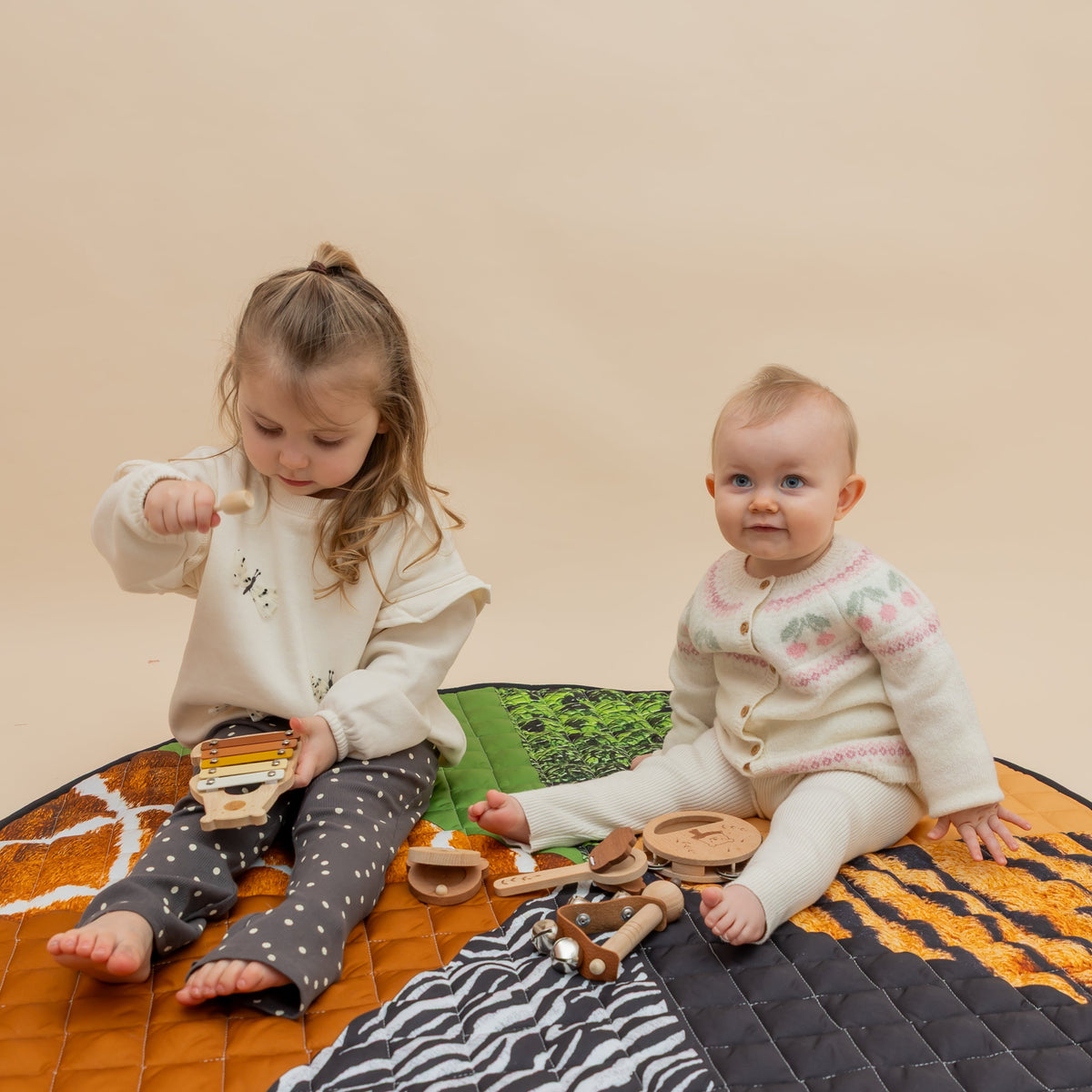
From a gentle rattle to a favourite nursery rhyme, sound can turn everyday play into an opportunity for babies and young children to listen, respond and interact.
Musical play doesn't need to be structured. Singing, clapping, tapping and experimenting with simple instruments can introduce children to different sounds, rhythms and movements while creating opportunities for shared play.
Discovering cause and effect
One of the simplest things children can discover through musical play is cause and effect.
Shake a bell and it makes a sound. Tap a tambourine and something happens. Strike a xylophone in different places and the sound changes.
As children experiment, they begin to notice that their actions can produce different responses. Repeating those actions gives them opportunities to explore what happens next.
Listening to different sounds
Musical instruments can introduce children to a variety of sounds in a simple, playful way.
Try playing one instrument at a time and allowing your child to listen before introducing another. You might explore the difference between the jingle of bells, the tap of a xylophone and the shake of a tambourine.
There's no need to rush from one activity to another. Giving children time to repeat sounds can be just as valuable as introducing something new.
Rhythm and movement
Music naturally invites movement.
Clapping along to a song, tapping an instrument or moving to a simple rhythm gives children opportunities to connect what they hear with what their bodies are doing.
As they grow, they may begin copying rhythms, anticipating familiar parts of songs or creating their own sounds and patterns.
It doesn't need to be perfectly in time. Exploration is the point.
Songs, rhymes and language
Songs and nursery rhymes introduce children to repeated words, sounds and rhythms.
Try singing a familiar rhyme while tapping an instrument to the beat. Pause before a familiar word or sound and give your child an opportunity to respond.
Even before children can sing the words themselves, they can listen, watch your face and begin becoming familiar with the patterns of songs they hear regularly.
Making music together
Some of the most valuable parts of musical play come from the interaction around it.
Take turns making a sound. Copy something your child does. Sing together. Make a silly noise and wait for their reaction.
These simple exchanges can turn an instrument into an opportunity for shared attention, listening and social play.
Keep musical play simple
You don't need a complicated activity or a perfectly planned music session.
Choose a few age-appropriate instruments, sit together and let your child explore. Follow their interest and allow plenty of repetition.
At Sunshine & Honey, our 5 Piece Wooden Musical Instrument Set gives little ones different sounds to discover through bells, percussion and musical play.
Always follow the age guidance and safety instructions supplied with individual toys and instruments.

Leave a comment
This site is protected by hCaptcha and the hCaptcha Privacy Policy and Terms of Service apply.